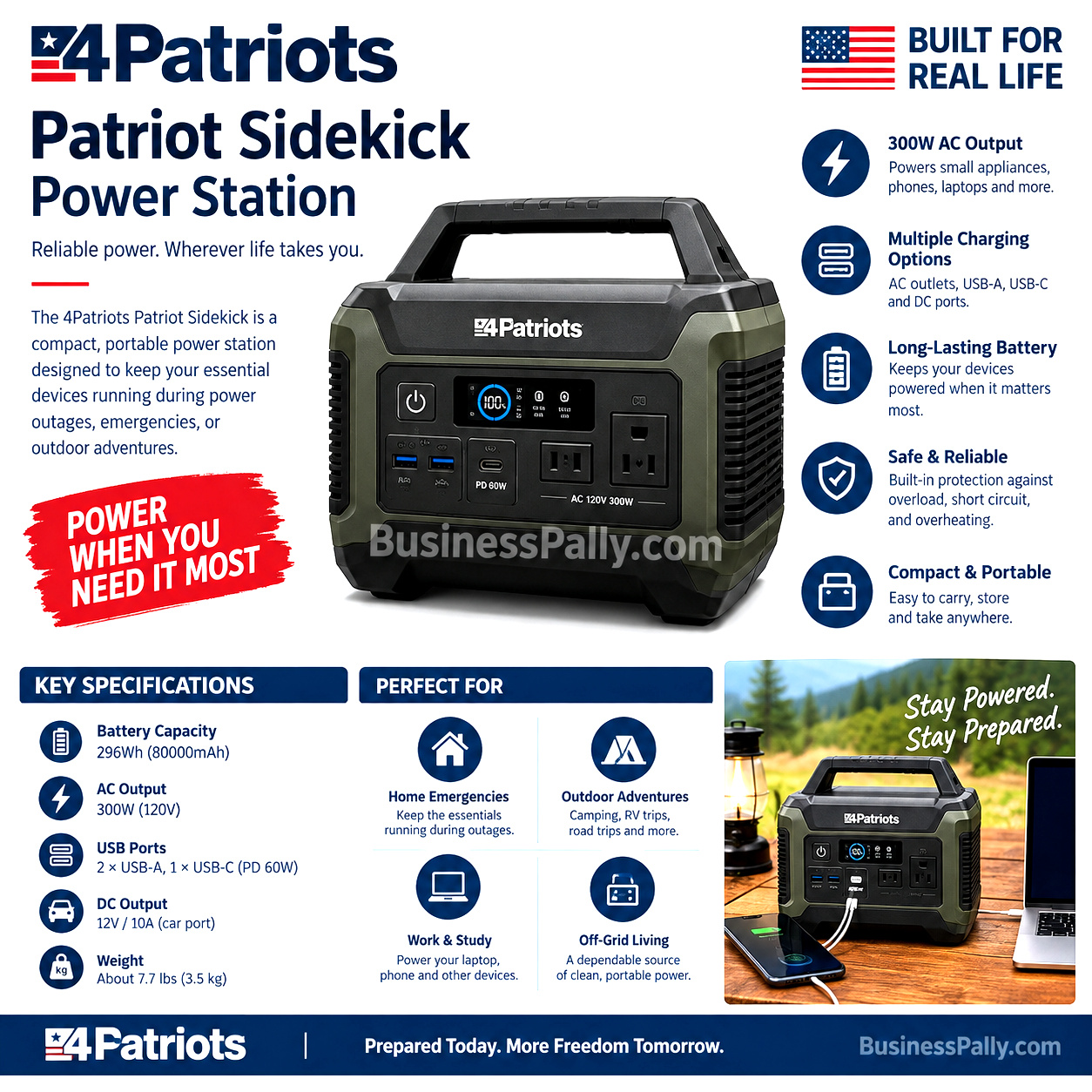
Sidekick can run a Refrigerator or Freezer
A small refrigerator or compact freezer can fall within the Sidekick's operating range, but refrigerator specifications require particular attention.
An appliance's running wattage does not necessarily represent its startup requirement.
Compressor-based refrigerators can briefly draw considerably more power when the compressor starts.
The Sidekick's published 80W mini-fridge example should therefore not be interpreted as a guarantee that every refrigerator rated around 80W will work.
A full-size refrigerator or freezer is a different use case. Its compressor startup demand and overall energy consumption can make the Sidekick unsuitable, particularly when a long runtime is required.
CPAP and Medical Equipment
The Sidekick's 300W inverter is sufficient for many CPAP machines from an output-capacity perspective, but total battery runtime depends heavily on the particular machine and accessories.
A CPAP using a heated humidifier or heated tubing can consume substantially more electricity than the CPAP blower alone. That can reduce overnight runtime considerably.
For this reason, calculate the actual consumption of the complete CPAP setup before relying on the Sidekick for overnight backup.
A power meter can provide a more useful measurement than the manufacturer's general wattage rating.
The same principle applies to other medical equipment: confirm both the required operating wattage and the expected duration before using the Sidekick as emergency power.
Devices the Sidekick Should Not Be Expected to Run
The 300W continuous inverter makes the Sidekick unsuitable for most high-wattage heating and cooking appliances.
Do not expect it to operate equipment such as electric heaters, air conditioners, electric stoves, microwaves, kettles, toasters, hair dryers or high-powered coffee makers.
Large refrigerators, pumps and other motor-driven equipment also require additional attention because their startup surge may exceed the Sidekick's 360W peak output.
The issue is not simply battery capacity. Even if the battery theoretically contained enough energy for a particular appliance, the inverter still has to deliver the required power.
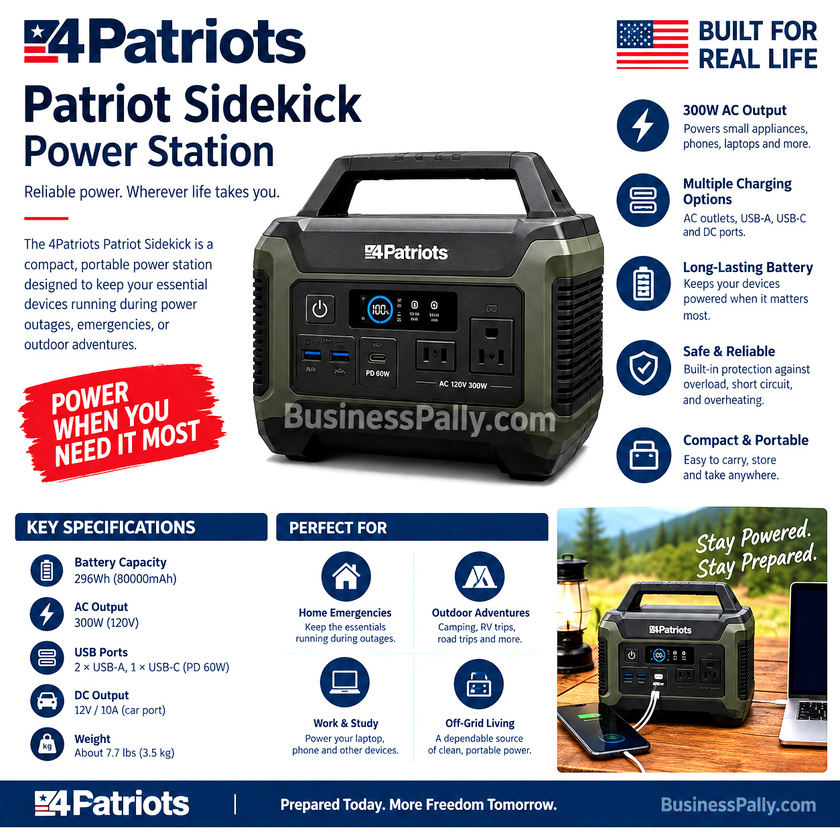
Solar Charging During an Extended Outage
The solar panel gives the Sidekick an important advantage over a battery-only power bank: the stored energy can be replenished without grid electricity.
However, the 40W panel is relatively small, so solar recovery is slow compared with the power consumption of many household appliances.
For extended outages, energy management becomes important. Using LED lights, charging phones directly through USB, switching equipment off when unnecessary and avoiding high-wattage appliances will allow the stored energy to last longer.
Solar charging is also dependent on daylight. Cloud cover, rain, shade and poor panel positioning can significantly reduce the available charging power.
Maintenance and Everyday Use
The Sidekick requires little routine maintenance because it has no gasoline engine, oil or fuel system.
Keep the battery charged, inspect the cables and connectors periodically, keep the solar panel clean and avoid exposing the power station to water or excessive heat.
Before an emergency, verify that the display, AC outlets, USB ports, 12V outputs and solar charging system are functioning.
The most useful preparation is to know the actual wattage of the equipment you intend to operate.
Any Drawbacks
Some people have complained about issues around charging, individual ports, unexpected shutdowns and units that eventually stopped accepting a charge.
Therefore, the safest approach is to test the unit when it arrives rather than storing it untouched until an emergency occurs.
Check every AC, USB and DC output. Charge it from AC power, test the solar input, connect the equipment you expect to use and monitor its battery consumption.
If the Sidekick is intended for a critical application, test that exact setup for several hours before relying on it.
Also, its 299Wh battery is relatively small for extended household backup. Its 300W continuous output prevents it from operating most high-power appliances.
The included 40W solar panel can recharge the battery but does so relatively slowly. The short solar cable can also restrict panel placement.
Before buying a Sidekick power station, consider the price against its relatively modest battery capacity.
The product's value comes from the combination of portability, LiFePO4 battery chemistry, solar charging, multiple output types and the included panel rather than from battery capacity alone.
Conclusion
The 4Patriots Patriot Power Sidekick is best understood as a compact 299Wh solar-capable battery backup, not a replacement for a conventional household generator or a large portable power station.
Its 300W inverter, 40W solar panel, LiFePO4 battery and multiple AC, USB and 12V outputs make it appropriate for phones, laptops, lights, small fans, televisions, radios, selected small refrigerators and similar low-power equipment.
For emergency preparedness, the Sidekick makes the most sense when the goal is to maintain essential electronics and small loads, particularly when portability and solar recharging matter more than running major appliances.